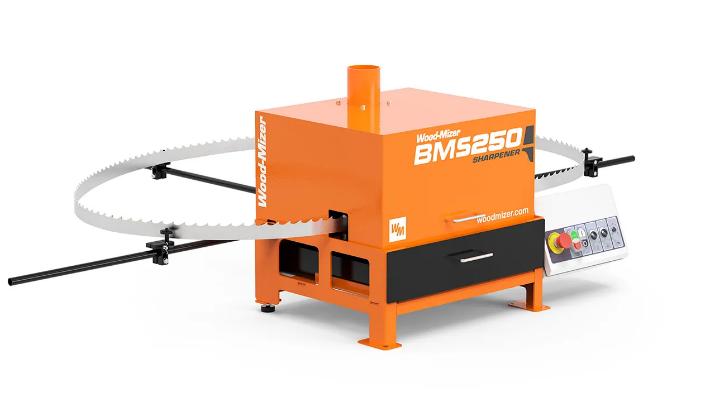
BMS250AS Blade Sharpener
The BMS250 automatic blade sharpener uses full-profile CBN grinding discs (127 mm diameter) for reliable and consistent sharpening. Equipped with a 0.18 kW single-phase AC motor at 2,800 rpm. Handles blade widths from 25 mm to 50 mm.
The Wood-Mizer BMS250AS is an automatic blade sharpening system designed for sawmill operations requiring consistent blade maintenance without manual intervention. The machine utilizes full-profile CBN (cubic boron nitride) grinding discs measuring 127 mm in diameter, enabling simultaneous sharpening of multiple blade teeth profiles in a single pass. This automated approach eliminates the variability associated with hand sharpening and reduces operator skill dependency. The BMS250AS is driven by a 0.18 kW single-phase AC motor operating at 2,800 rpm, providing adequate grinding force for reliable CBN disc performance across standard saw blade geometries. The full-profile disc design accommodates various tooth configurations without requiring disc changes between operations, reducing setup time and maintaining consistent rake and clearance angles across the entire blade width. Single-phase power availability makes integration into existing sawmill electrical infrastructure straightforward, particularly in smaller to mid-sized operations where three-phase service may not be available. This sharpener targets sawyers operating in lumber cutting environments where blade dulling directly impacts feed rates, surface finish quality, and production throughput. The machine is well-suited for operations processing hardwoods and softwoods through bandsaw, circular saw, or gang saw applications where blade maintenance occurs daily or multiple times per shift. It serves workshops with consistent sharpening volume needs—typically medium operations with 5–50 personnel producing 500–2,000 board feet daily—where downtime for external sharpening services becomes economically unjustifiable. Compared to manual sharpening benches or external service dependencies, the BMS250AS delivers faster turnaround times and standardized tooth geometry maintenance. Its automatic operation frees operator time for primary milling tasks while ensuring that blade sharpness remains consistent throughout production runs, directly improving lumber quality and reducing material waste from overworked, dulled blades.


