Area GL
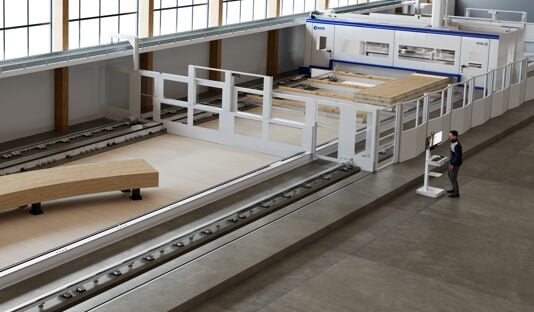
The Area GL is a 5-axis CNC machining centre with a mobile-gantry structure, ideal for producing straight and curved beams in glulam. It features advanced machining capabilities for timber construction applications.
The Area GL is a 5-axis CNC machining centre built on a mobile-gantry platform, engineered for high-precision production of structural timber elements in construction and glulam manufacturing. The machine handles workpieces up to 60 metres in length and 5 metres in width, with a maximum thickness of 550 mm, making it suited for large-scale beam production where dimensional consistency and geometric complexity are critical requirements. The system combines a 30 kW spindle capable of 13,000 rpm with dual specialized machining aggregates: an angular drive unit delivering 47.7 Nm torque via HSK 80 chuck for multi-axis cutting operations, and a dedicated mortise chain aggregate with 400 mm machining depth and 98 x 10 mm chain width for precise joinery work. The 1,100 mm saw blade diameter enables efficient primary dimensioning and curved cuts on large elements. Mobile-gantry architecture provides access to both beam surfaces, including 280 mm underside clearance for the angular drive, eliminating repositioning during complex multi-sided machining sequences. This machine targets medium to large industrial operations producing engineered timber products—including curved and straight glulam beams, laminated veneer lumber (LVL), and solid wood construction elements requiring integrated mortises, tenons, and geometric shaping. It serves structural carpentry shops, engineered wood manufacturers, and timber-frame builders operating production runs of 50+ units monthly where labor-intensive manual joinery must be eliminated and tolerance control is non-negotiable for building code compliance. Within its class, the Area GL differentiates through purpose-built joinery capability (mortise chain) integrated into a dimensional-capacity platform, rather than requiring separate tenoning or mortising equipment. The combination of linear cutting (saw blade), rotary finishing (spindle), and chain-driven joint production on a single platform reduces setup time and material handling between operations—a significant efficiency gain for high-volume construction element production.
Side by side, on real specs