CENTATEQ N-210
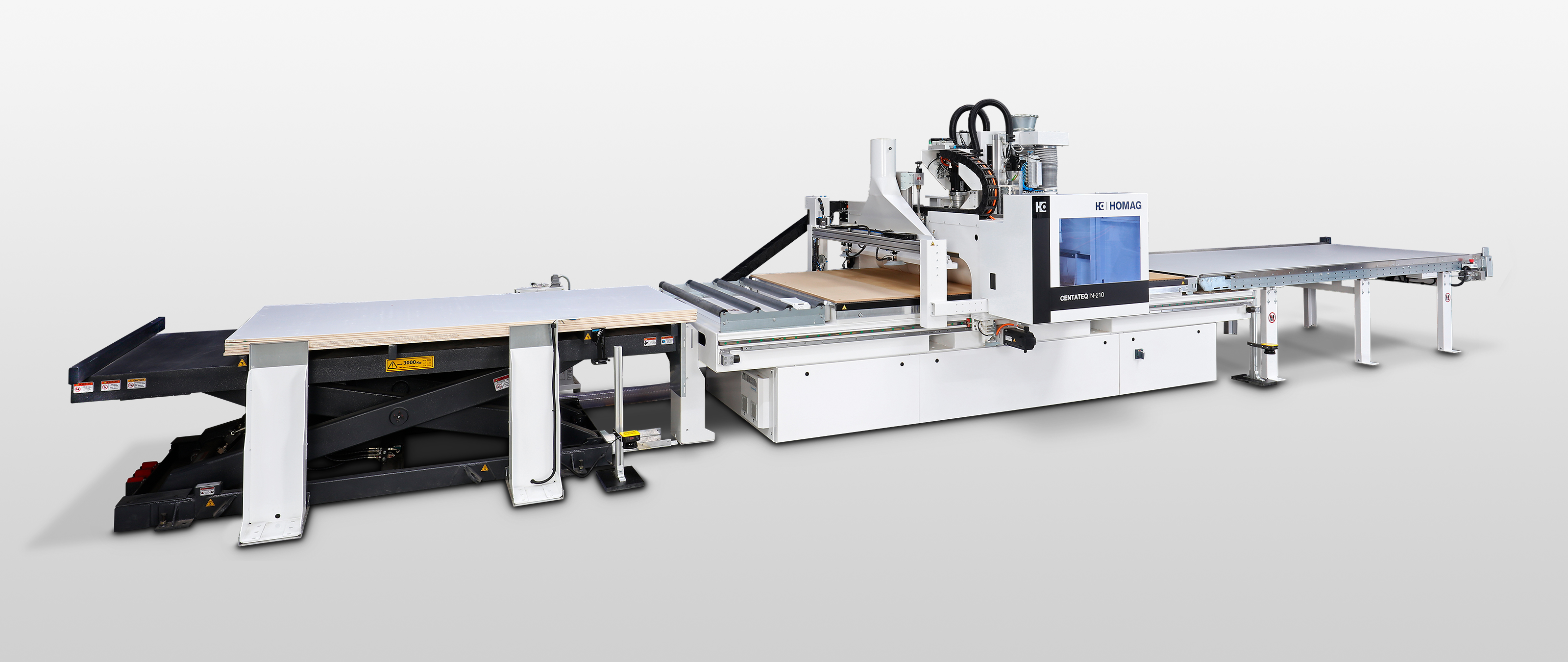
Compact CNC machining center for wood processing with integrated safety system and flexible automation options. Features a 25% smaller footprint with barrier-free safety concept and multi-position suction capabilities.
The CENTATEQ N-210 is a compact CNC machining center engineered for simultaneous processing of solid wood and panel materials in production environments. Its 25% reduced footprint makes it suitable for space-constrained workshops while maintaining the processing power and precision required for professional wood manufacturing. The machine delivers flexibility across multiple material types and part geometries without sacrificing throughput or accuracy. The N-210 distinguishes itself through its intelligent automation architecture, offering 14 distinct configuration options that scale from standalone operation to fully integrated automated cell environments. The traveling tool changer with 8 slots moves dynamically in both X and Y directions, minimizing cycle times between tool exchanges. The matrix table with cross-segment positioning and automatically selectable vacuum field divisions ensures consistent workholding across varying part sizes and shapes, while the integrated 4-nozzle blow-off system maintains chip and dust clearance during high-speed operations. Safety integration follows the Safescan barrier-free safety concept, eliminating the need for traditional step mats while maintaining full operator protection—critical for workshops operating multiple shifts or integrating the machine into attended production lines. This design philosophy reflects modern manufacturing expectations where safety cannot compromise accessibility or workflow efficiency. The CENTATEQ N-210 targets medium to industrial operations processing custom or semi-custom components: furniture manufacturers requiring design flexibility, cabinet shops balancing batch efficiency with part variation, and timber-construction specialists machining solid wood structural elements. Its compact footprint appeals to shops with limited floor space, while its 14 automation pathways allow scaling from manual loading to robotic cell integration as production volume increases.