FEEDBOT
Robot Solutions for the Furniture Industry featuring five- or six-axis robotic handling integrated into CNC processing cells. Enables flexible, automated workpiece processing with intelligent part identification and energy-efficient operation.
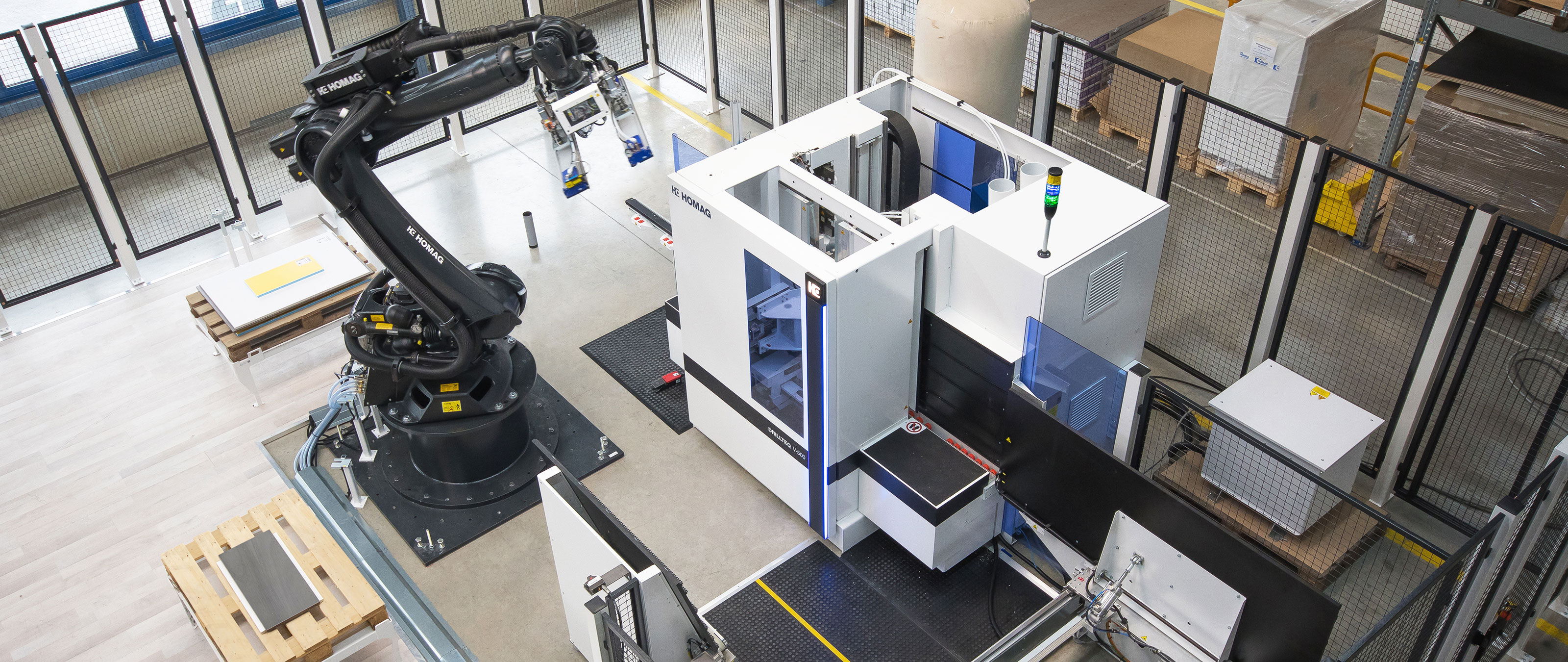
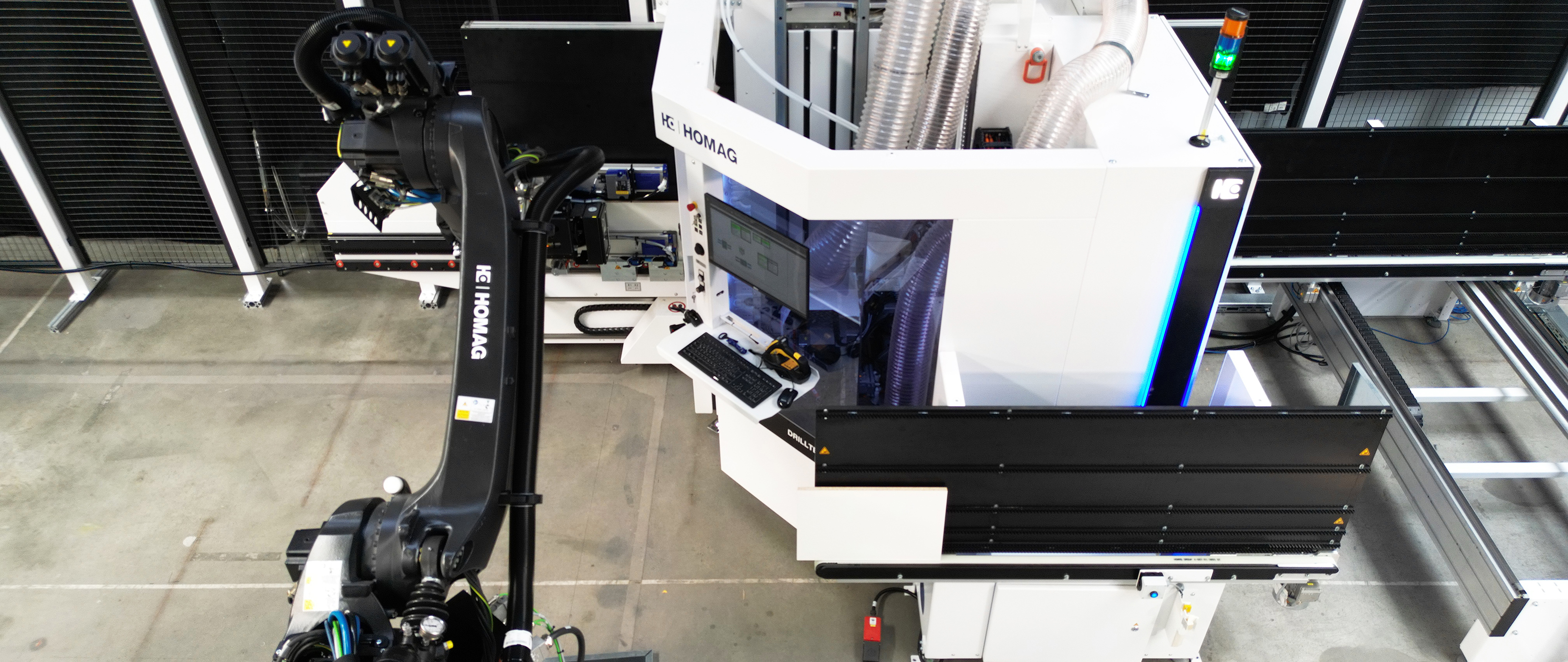
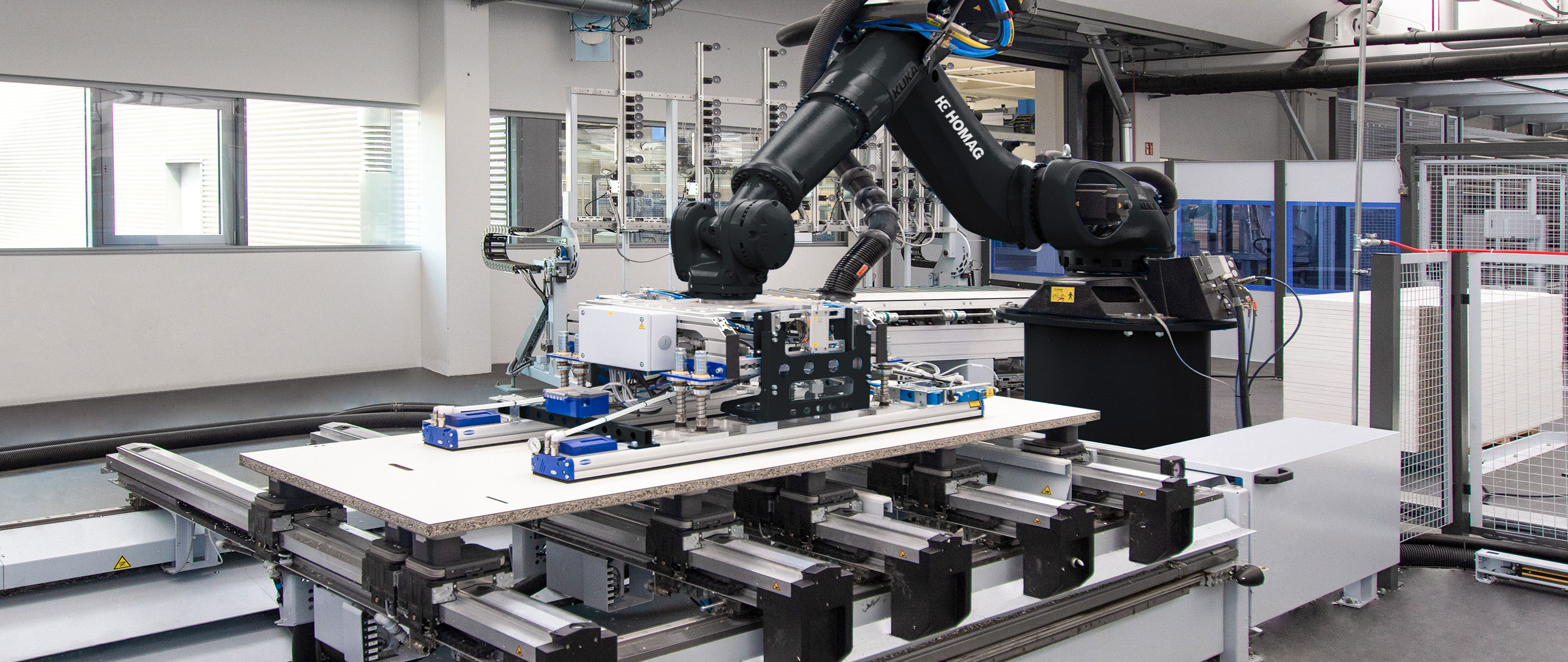
FEEDBOT is a robotic automation solution that integrates five- or six-axis robotic handling directly into CNC processing cells, serving as the central control point for flexible, unmanned workpiece handling in furniture manufacturing. The system automates the complete cycle of material feed, positioning, and unload operations, enabling continuous production without manual intervention while maintaining full compatibility with existing CNC control architectures. The platform accommodates workpieces ranging from 300–3050 mm in length and 300–1675 mm in width, with thicknesses between 13–60 mm, and handles individual parts up to 70 kg. The robot automatically adapts its travel movements and positioning logic to different workpiece geometries without requiring external parameter reconfiguration, utilizing standard EURO pallet (1200 × 800 × 144 mm) substrates and supporting stack heights up to 1500 mm. This dimensional flexibility eliminates changeover downtime when switching between part families within compatible size ranges. FEEDBOT is engineered for medium to industrial-scale furniture producers—particularly those running multi-shift operations on panel-based, solid wood, or semi-finished components. It delivers value in high-mix, medium-volume environments where labor costs and machine utilization directly impact margins. The system excels in applications requiring consistent part orientation, repeat positioning accuracy, and integration with existing CNC infrastructure, making it particularly suited to cabinet manufacturers, window and door producers, and custom millwork shops operating at 20+ units per shift. Within the robotic CNC automation class, FEEDBOT differentiates through its plug-and-play integration model and dimension-adaptive control logic, reducing commissioning time compared to custom-programmed cell solutions. Its modular five- or six-axis configuration allows specification matched to part complexity and reach requirements, balancing capital investment against production flexibility.