Morbidelli M100/200
A highly modular CNC machining centre designed for woodworking and advanced materials processing. Provides comprehensive routing, drilling, and edgebanding capabilities with flexible working area options.
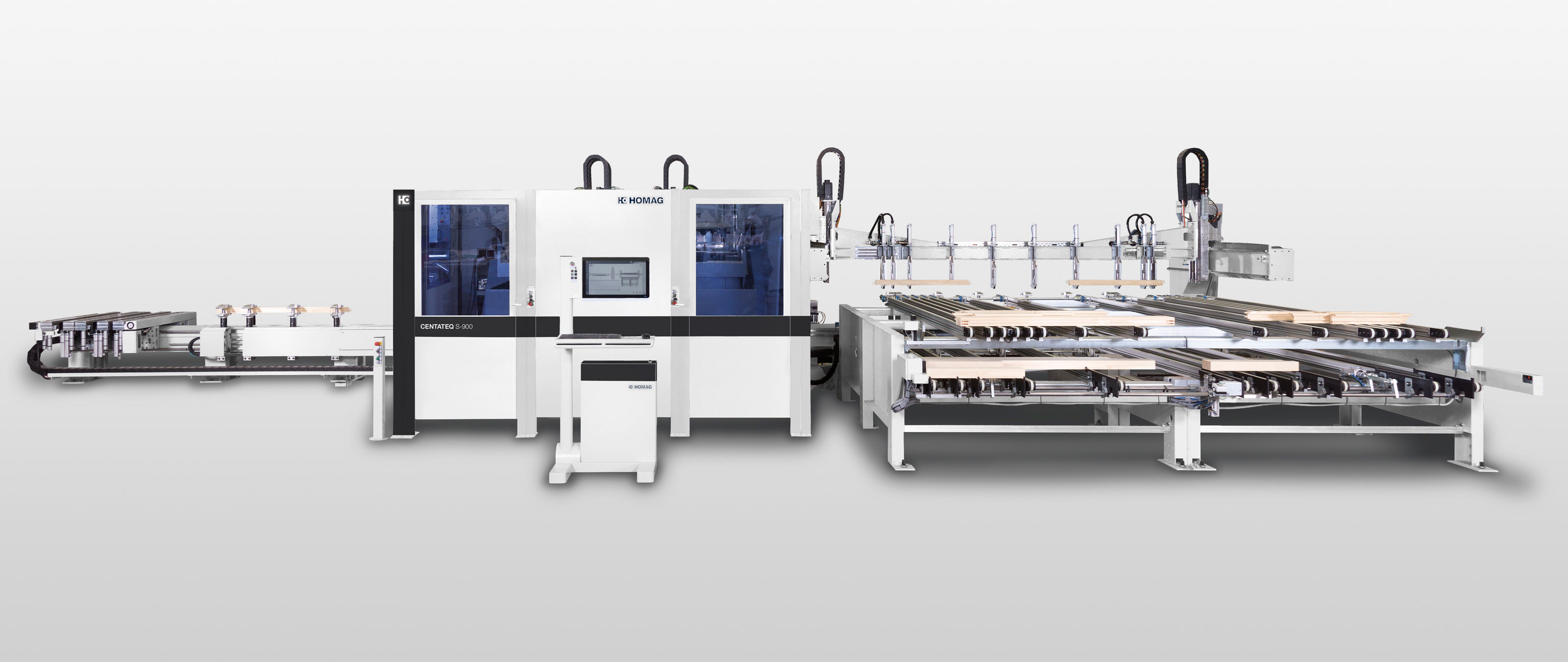
The Morbidelli M100/200 is a modular CNC machining centre engineered for high-precision routing, drilling, and edgebanding operations in woodworking and advanced materials processing. The machine bridges the gap between flexible job-shop production and consistent mid-volume manufacturing, accommodating panel formats from 3110×1320 mm up to 5510×1620 mm across two model variants. Key technical differentiators include dual spindle configurations: a primary routing unit delivering up to 15 kW at 24,000 rpm for profiling and detailed routing work, paired with an auxiliary routing spindle (4.5 kW, 18,000 rpm) for simultaneous multi-operation capability. The drilling unit supports up to 21 independent vertical spindles and 12 horizontal spindles, each operating at 8,000 rpm, enabling complex multi-hole patterns and edge drilling in a single setup. The M100 accommodates 44 tools with 180 mm Z-axis clearance, while the M200 expands capacity to 60 tools with 250 mm clearance, critical for processing thicker materials or component stacks. Vectorial feed rates reach 78 m/min on the ProSpeed configuration, minimizing cycle times on large-format work. This machine targets medium to industrial woodworking facilities producing cabinet components, custom millwork, and engineered wood assemblies at volumes exceeding 50 units per SKU monthly. Operations such as edge-band profiling, multi-stage pocket routing, through-drilling for dowels and cam locks, and integrated blade cutting (0–90° tilt unit) are executed sequentially without manual repositioning, reducing labour and setup time. The modular architecture—with configurable spindle and tool-changer options—accommodates diverse material specifications from solid hardwood and MDF to engineered panels and composite substrates. Within its class, the M100/200 emphasizes process integration and throughput consistency over ultra-high-speed production. Its strength lies in part complexity and precision repeatability rather than competing on raw cycle speed, making it ideal for operations where detail quality and reduced material handling directly impact profitability.
Side by side, on real specs