Stefani Cell E
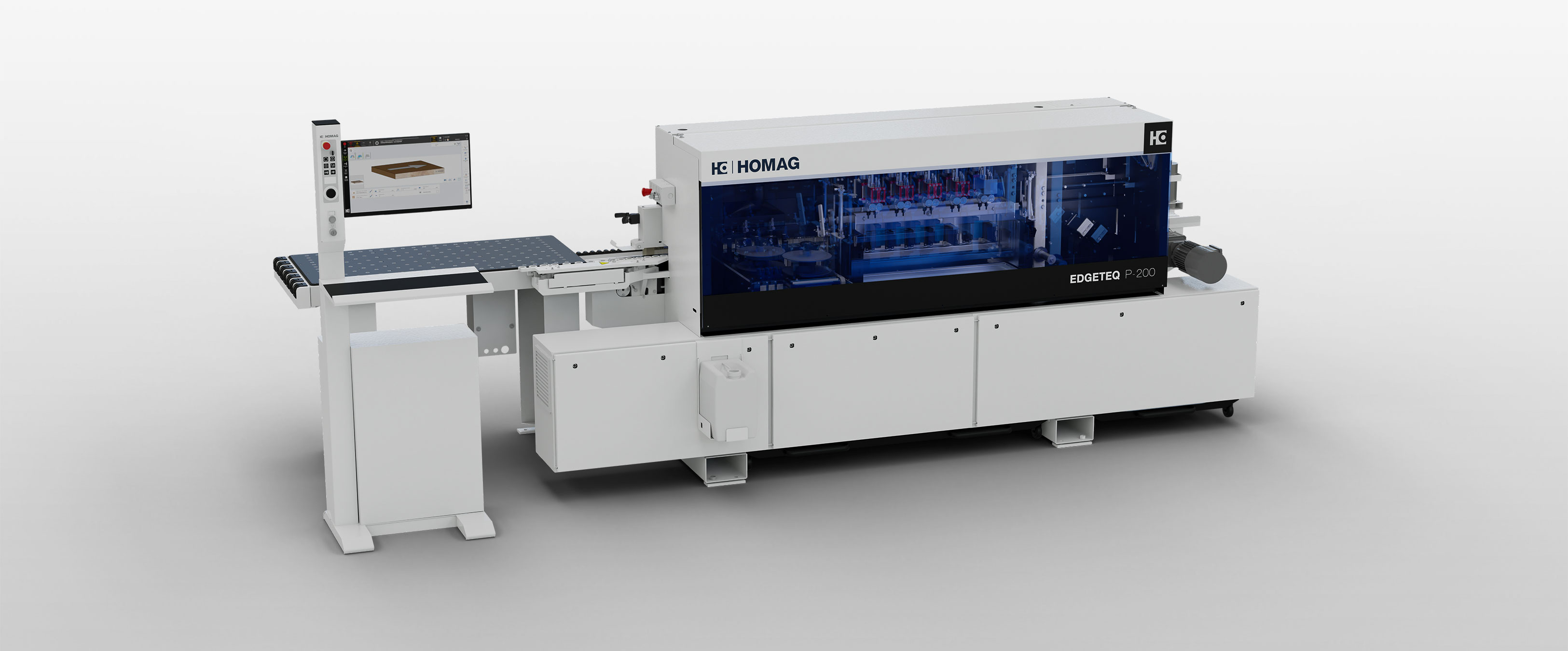
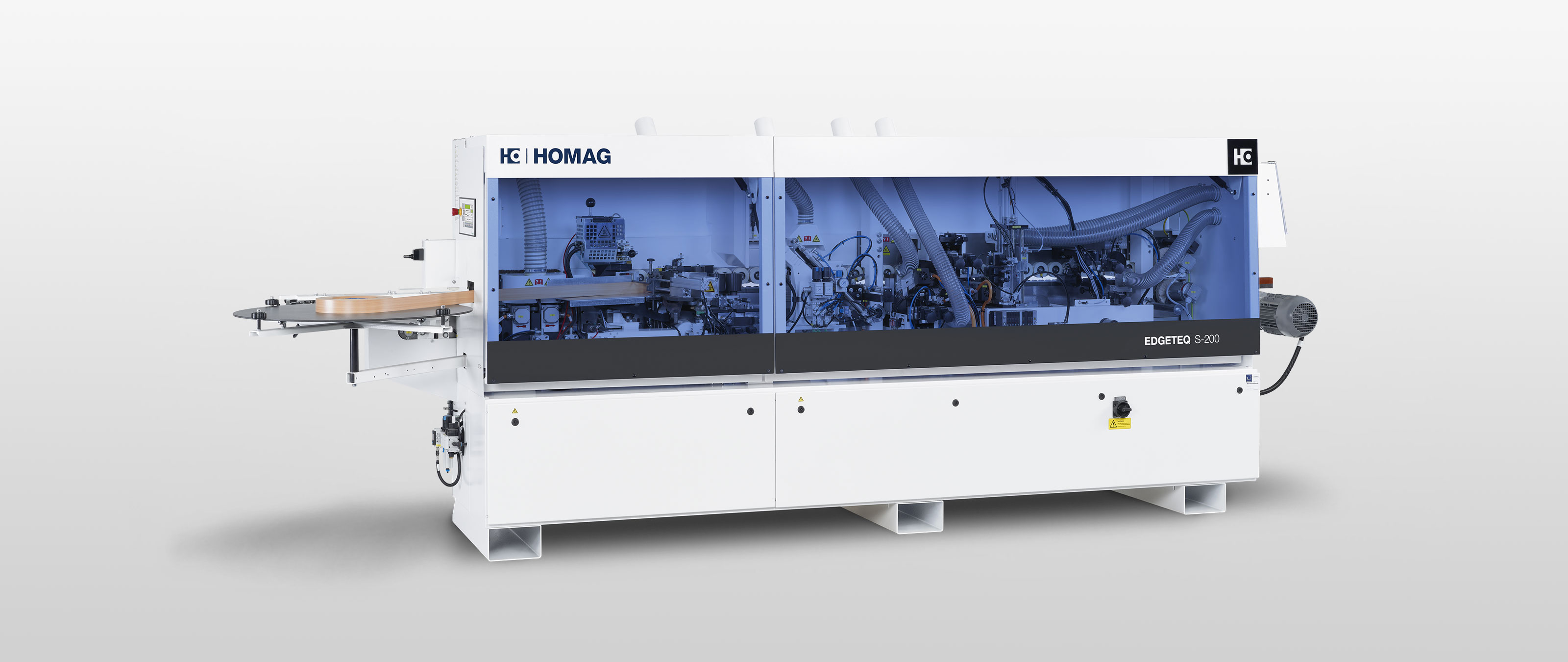
A flexible edgebanding cell that combines customized production of non-sized panels with compact overall design. Designed for single-operator production with integrated panel sizing capabilities.
The Stefani Cell E is a compact, single-operator edge banding system designed to integrate panel sizing and customized edge protection into a unified production workflow. It combines the proven edge banding technology of Stefani M, X, or S models with integrated panel dimensioning capabilities, enabling operators to process non-sized panels through to finished, edged components without external handling or intermediate setup. The machine operates across machinable dimensions of 250×95 mm to 3000×1200 mm (lengthwise feeding) or 120×250 mm to 1200×3000 mm (crosswise feeding), supporting both lengthwise and crosswise panel orientation. Critical to its flexibility is the ability to change color, thickness, and edge protection film specification mid-batch without program interruption, coupled with dynamic glue dosage adjustment and panel dimension modification during active machining. The Cell E incorporates closed-loop feedback management and homogeneous panel recognition, permitting continuous operator addition of parts during an active batch and enabling panel re-machining when quality conditions warrant it. This configuration targets small to medium job-shop and contract manufacturing environments where batch sizes are modest (typically 5–50 pieces per order) and material specifications vary frequently across production runs. The single-operator design reduces labor intensity while the integrated sizing function eliminates bottlenecks created by sequential, off-line dimensioning processes. It is well-suited for custom cabinet shops, architectural millwork producers, and panel processors handling MDF, plywood, and solid wood panels requiring edge protection in multiple film types and finishes. Within its class, the Cell E prioritizes operational flexibility and labor efficiency over high-speed throughput, making it competitive for low-to-medium volume custom production rather than large homogeneous batch runs. The absence of automatic program changeover via barcode or QR reading reflects its design for operator-driven, semi-automated workflow rather than lights-out batch sequencing.
Side by side, on real specs