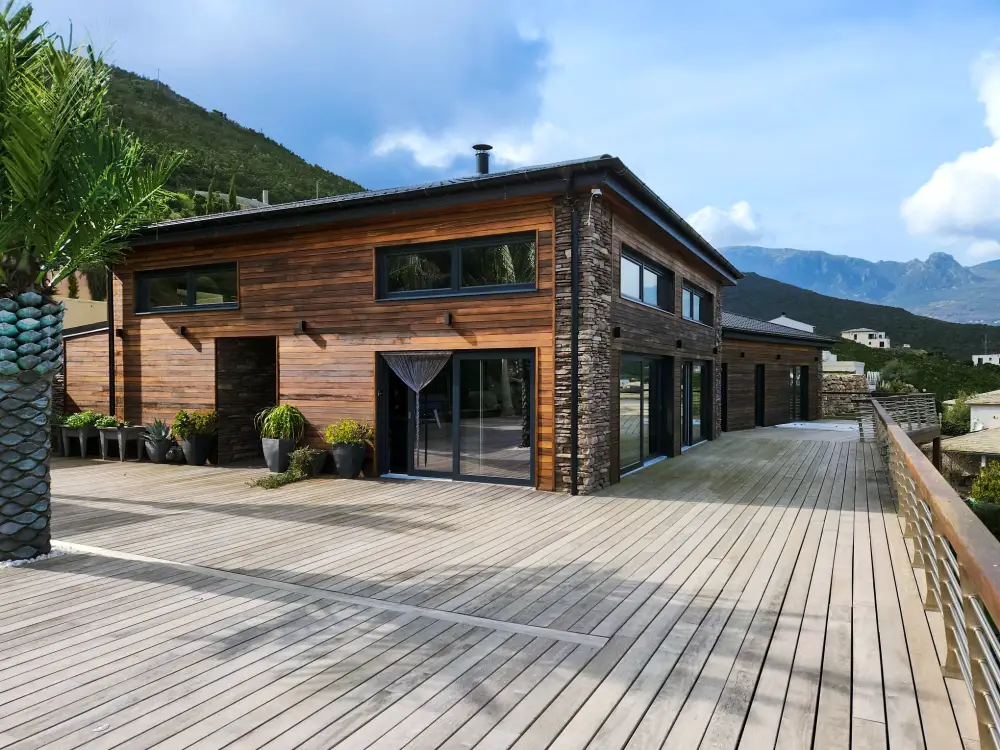
Timber-framing house Dorna Eco House
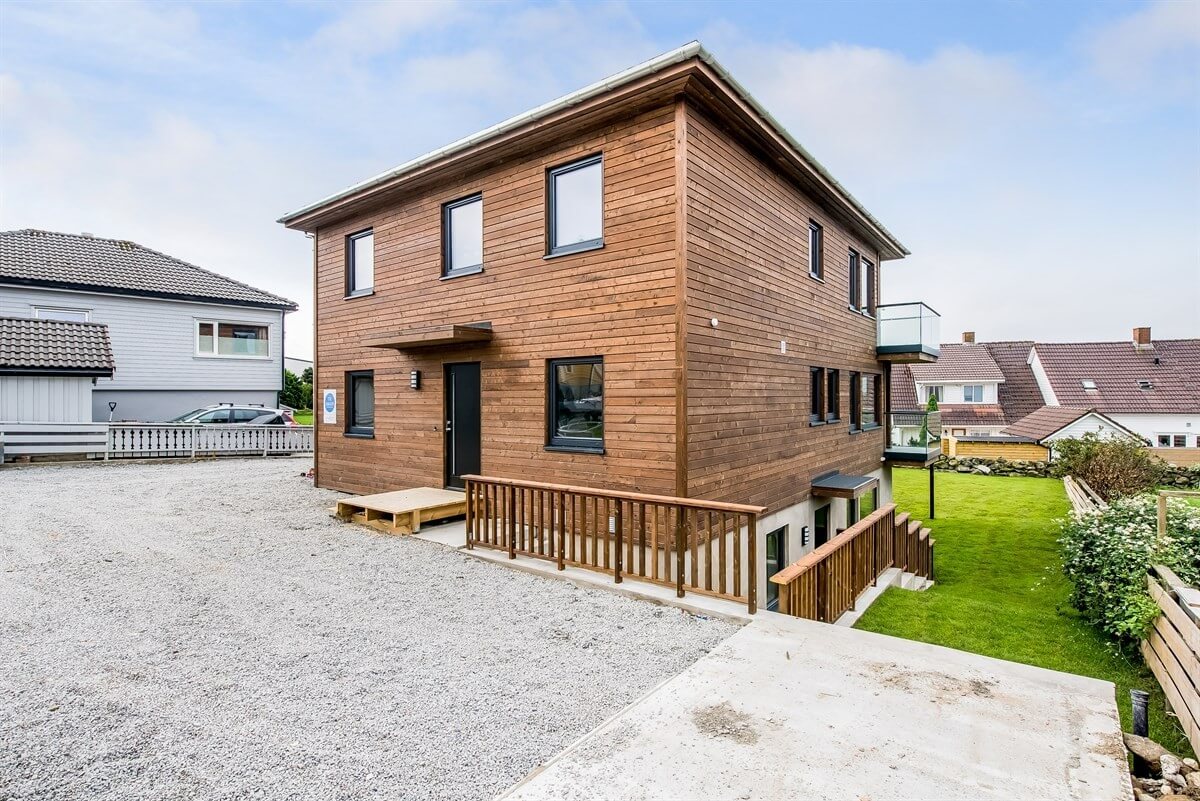
Dorna Eco House timber frame houses are custom-built wooden homes designed for high energy efficiency. Suitable for nZEB (Nearly Zero Energy Buildings) or passive house standards, these prefabricated houses offer precise factory-controlled construction, reduced on-site assembly time, and fully adaptable layouts.
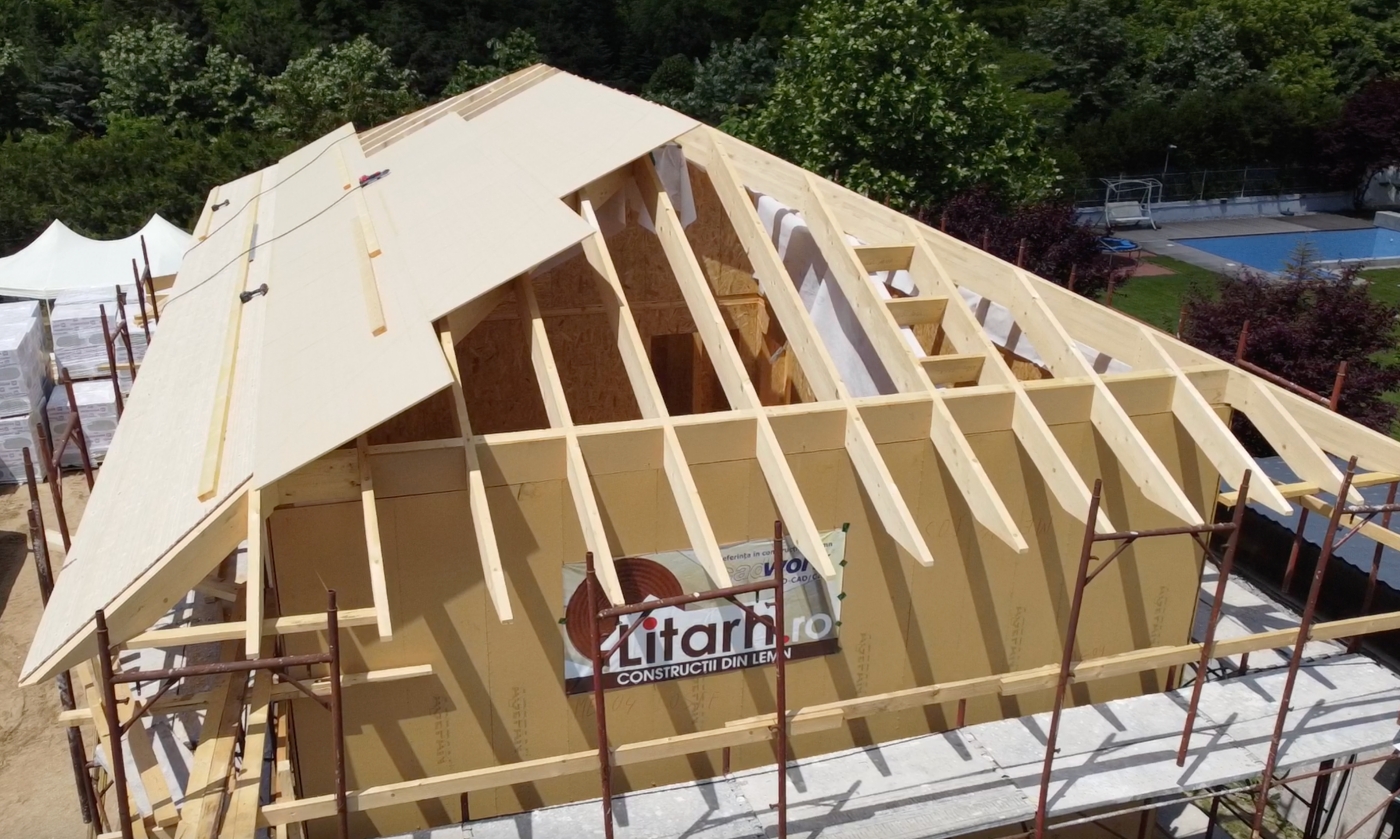
The Dorna Eco House timber-framing system is a prefabricated timber construction solution engineered to deliver complete wooden residential structures that meet nZEB (Nearly Zero Energy Building) and passive house certification standards. Each house is custom-designed and factory-built as a integrated timber frame assembly, optimizing thermal performance, airtightness, and structural integrity before on-site installation. These timber frame houses incorporate advanced envelope design with optimized stud spacing, continuous insulation integration, and precision joinery that minimizes thermal bridging. The prefabrication process ensures dimensional accuracy and quality control that exceeds site-built construction, with sealed, weather-resistant assemblies ready for rapid deployment. The modular timber frame approach allows for standardized component manufacturing while maintaining full customization of floor plans, fenestration, and architectural expression. Dorna Eco House systems serve residential developers, custom home builders, and energy-conscious owner-builders seeking to deliver high-performance housing without conventional masonry or steel frame dependencies. The product addresses growing market demand for sustainable, code-compliant residential solutions in regions with stringent energy performance requirements. Projects range from single-family custom builds to multi-unit residential developments, with production capabilities supporting both artisanal and volume construction workflows. As a prefabricated timber construction product, Dorna Eco House differentiates through integrated design-to-manufacture workflows that align structural timber framing with thermal, acoustic, and moisture management layers before delivery. This contrasts with traditional stick-framing approaches that assemble envelope components on-site, introducing quality variability and extended construction schedules. The system competes within the growing European timber construction market alongside mass-timber (CLT/glulam) solutions and conventional prefabricated frame manufacturers.