WEINIG SOLID RIP V 310
The intelligent concept for profitable cutting in timber processing. An advanced rip saw system designed for optimal wood utilization and cost efficiency.
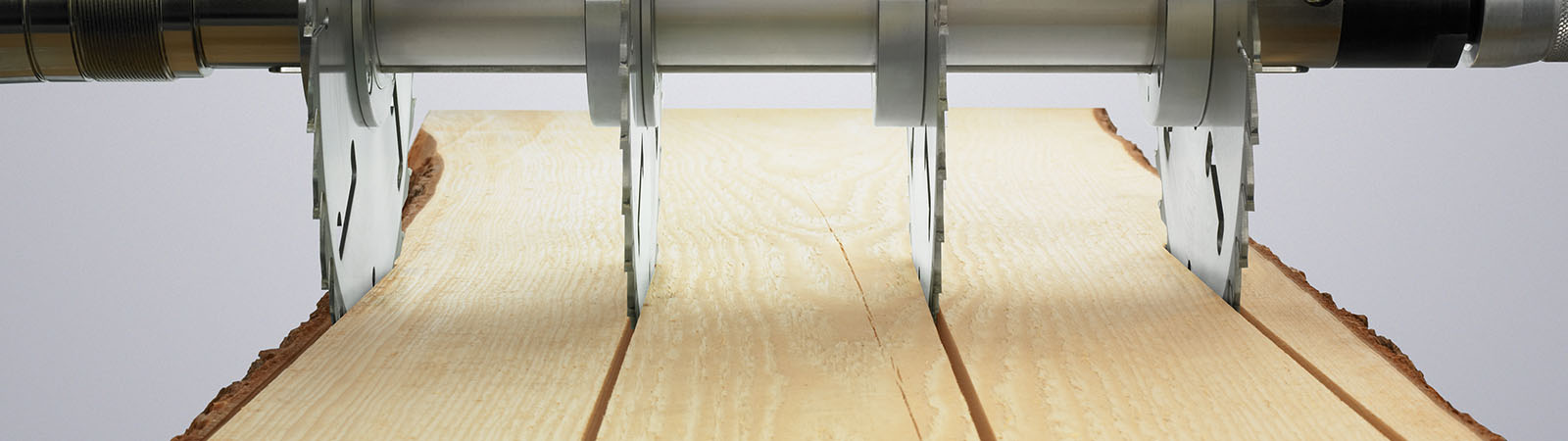
The WEINIG SOLID RIP V 310 is a precision rip saw system designed for primary and secondary breakdown of solid wood lumber and engineered wood products. It performs lengthwise cutting operations with high accuracy and repeatability, serving as a critical production stage in timber processing workflows where material optimization and throughput directly impact profitability. The machine employs a double-sided prism guide feed system with specialized alloy components to ensure consistent material positioning and minimal deviation during the cutting process. Its configurable blade arrangement—supporting both fixed and movable saw blades with single or dual automatically adjustable options—enables operators to adapt quickly to varying material widths and thicknesses without extended changeover time. This architectural approach delivers an average of 8% wood loss reduction compared to standard rip saw configurations, translating to measurable yield improvements in high-volume operations. The SOLID RIP V 310 targets medium to industrial-scale timber processors, sawmills, and integrated production facilities handling volumes from 50+ cubic meters daily. It accommodates both softwood and hardwood species, making it suitable for operations processing dimensional lumber, fingerjointing blanks, construction timbers, and panel components. The machine's flexible production architecture supports both continuous-feed production runs and small-batch customization, accommodating just-in-time manufacturing requirements without sacrificing cycle times. Within its class, the SOLID RIP V 310 distinguishes itself through its dual-blade automation capability and prism-guided feed precision, which together reduce material variance losses that competing fixed-blade systems typically experience with lumber variation. The intelligent blade adjustment system addresses a persistent challenge in timber processing: maintaining optimal kerf width and cutting quality as material moisture content and density naturally fluctuate.