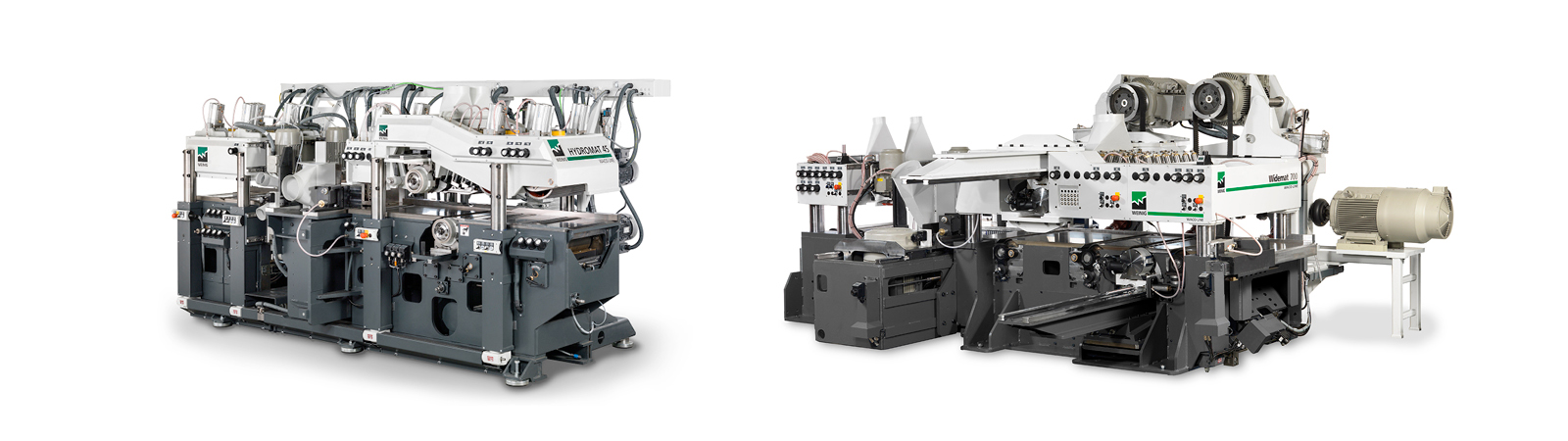
WEINIG Wide Planing Series
High-capacity planing machine designed for large dimension processing in glulam, solid construction timber, and solid wood panel production. Features column guide feed system for reliable performance with oversized workpieces.
The WEINIG Wide Planing Series is a high-capacity industrial planing system engineered for processing large-dimension lumber and engineered wood products in a single pass. Designed around a column guide feed system architecture, these machines deliver consistent thickness and surface quality across glulam beams, solid construction timber, and wide solid wood panels—materials that demand precision and reliability in structural and architectural applications. The column guide feed mechanism represents a key technical differentiator in this class, providing superior flatness control and reduced deflection during processing of oversized workpieces. This design eliminates common issues associated with conventional parallel-bar systems when handling heavy or irregular stock, ensuring dimensional consistency and reducing scrap rates in high-volume production. The feed system's mechanical stability allows operators to achieve tight tolerances on both face and edge surfaces without requiring secondary planing passes. This machine class targets industrial manufacturers operating at production volumes of 100+ units daily, including glulam producers, timber frame builders, CLT (cross-laminated timber) suppliers, and solid wood panel fabricators. Operations typically run continuously in 2–3 shift patterns, requiring machines that can sustain high throughput while maintaining output quality. The Wide Planing Series is calibrated for enterprises with 50+ employees managing dedicated production lines rather than job-shop or custom millwork environments. Within the industrial planing sector, WEINIG's column guide architecture competes against conventional four-square and drum-feed systems by offering superior handling of dimension variation and material heterogeneity. The design prioritizes throughput stability over tooling flexibility, making it optimal for manufacturers committed to specific material categories and dimensional ranges rather than frequent changeover scenarios.