Class Si 300
Manual sliding table saw with 300 mm blade designed for versatile solid wood processing applications. Offers reliable cutting performance for ripping and squaring operations.
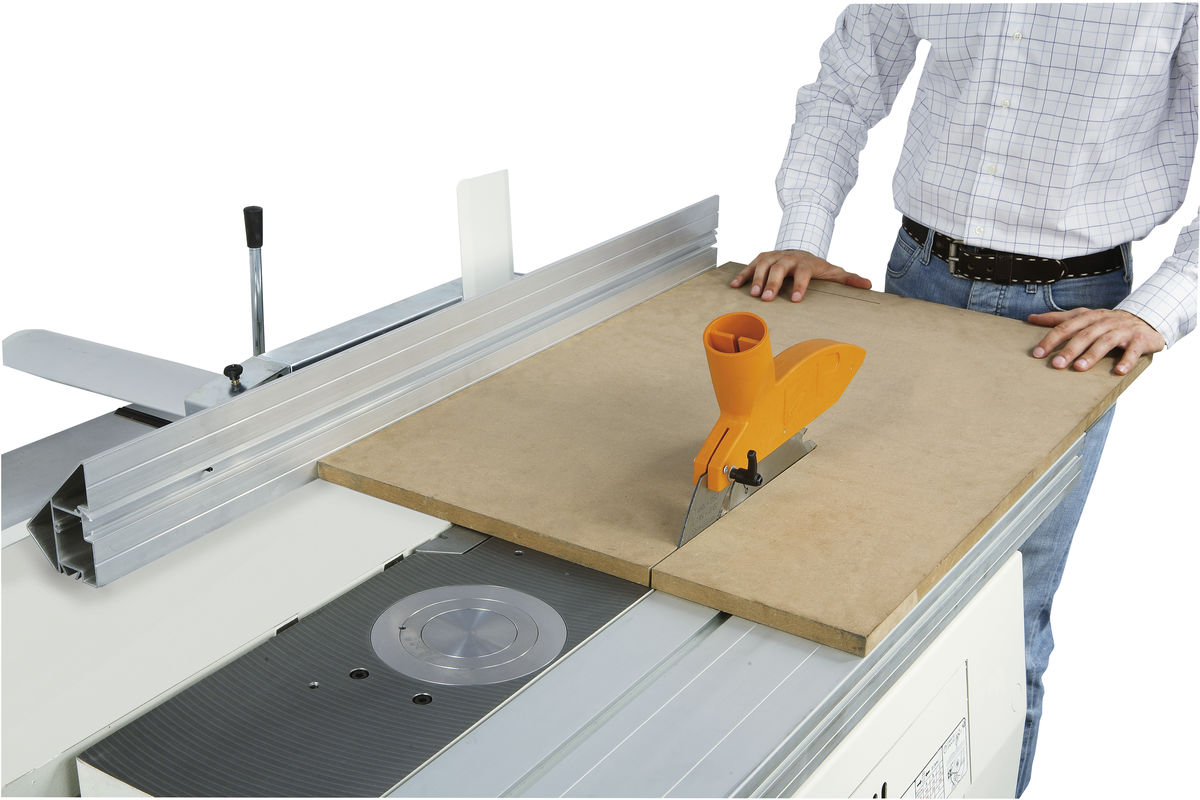
The Class Si 300 is a manual sliding table saw purpose-built for solid wood processing, combining a compact footprint with versatile cutting capability. Engineered by SCM Group, it delivers reliable performance for both ripping and cross-cutting operations across a range of solid wood stock, making it suitable for workshops seeking dependable general-purpose saw performance without automation complexity. The machine accommodates saw blades up to 315 mm diameter with integral scoring capability, enabling clean crosscuts and rip cuts with minimal tear-out on finished surfaces. Operators can achieve cutting widths up to 1500 mm on the rip fence and squaring capacities reaching 3800 x 3200 mm—specifications that position this machine as capable of handling both narrow stock and larger sheet dimensions. The manual sliding table design provides intuitive control and flexibility for varied workpiece geometries, while the three-phase motor (starting at 5–6 kW, 50/60 Hz) delivers sufficient torque for consistent cutting across softwoods and hardwoods. The Class Si 300 targets small to medium woodworking operations—carpentry shops, bespoke furniture makers, and local millwork facilities—where production volumes do not yet justify fully automated systems but precision and repeatability are essential. The machine's 3200 mm minimum squaring width and 1500 mm rip capacity make it practical for component production, frame-and-panel assembly, and custom solid wood millwork where batch sizes range from dozens to a few hundred pieces. Its manual operation model reduces setup overhead and allows rapid changeovers between different workpiece dimensions. Within its class, the Class Si 300 represents a mid-range option that balances accessibility with robust engineering. The combination of manual control, generous working dimensions, and integrated scoring functionality appeals to operators who value direct feedback during cutting and the ability to adapt quickly to job-specific requirements without complex programming or setup procedures.
Side by side, on real specs