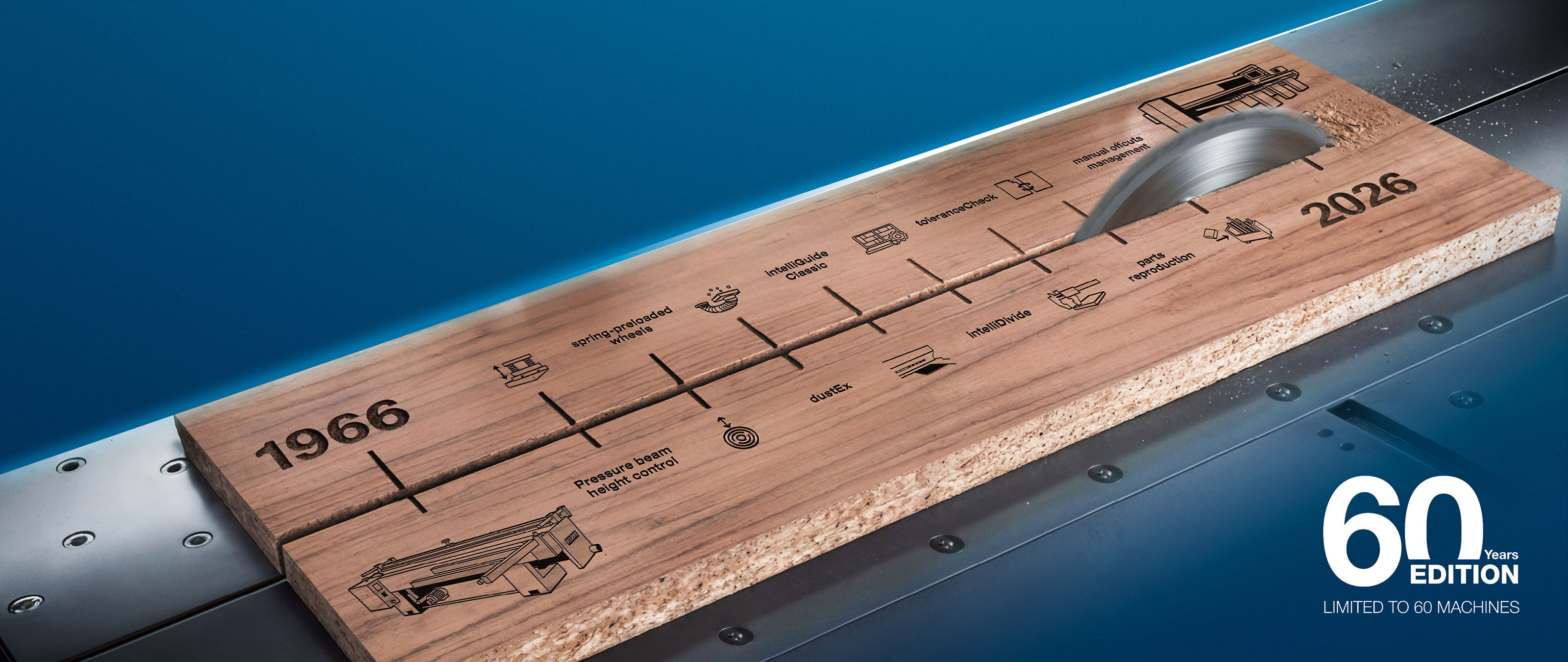
SAWTEQ Edition 60
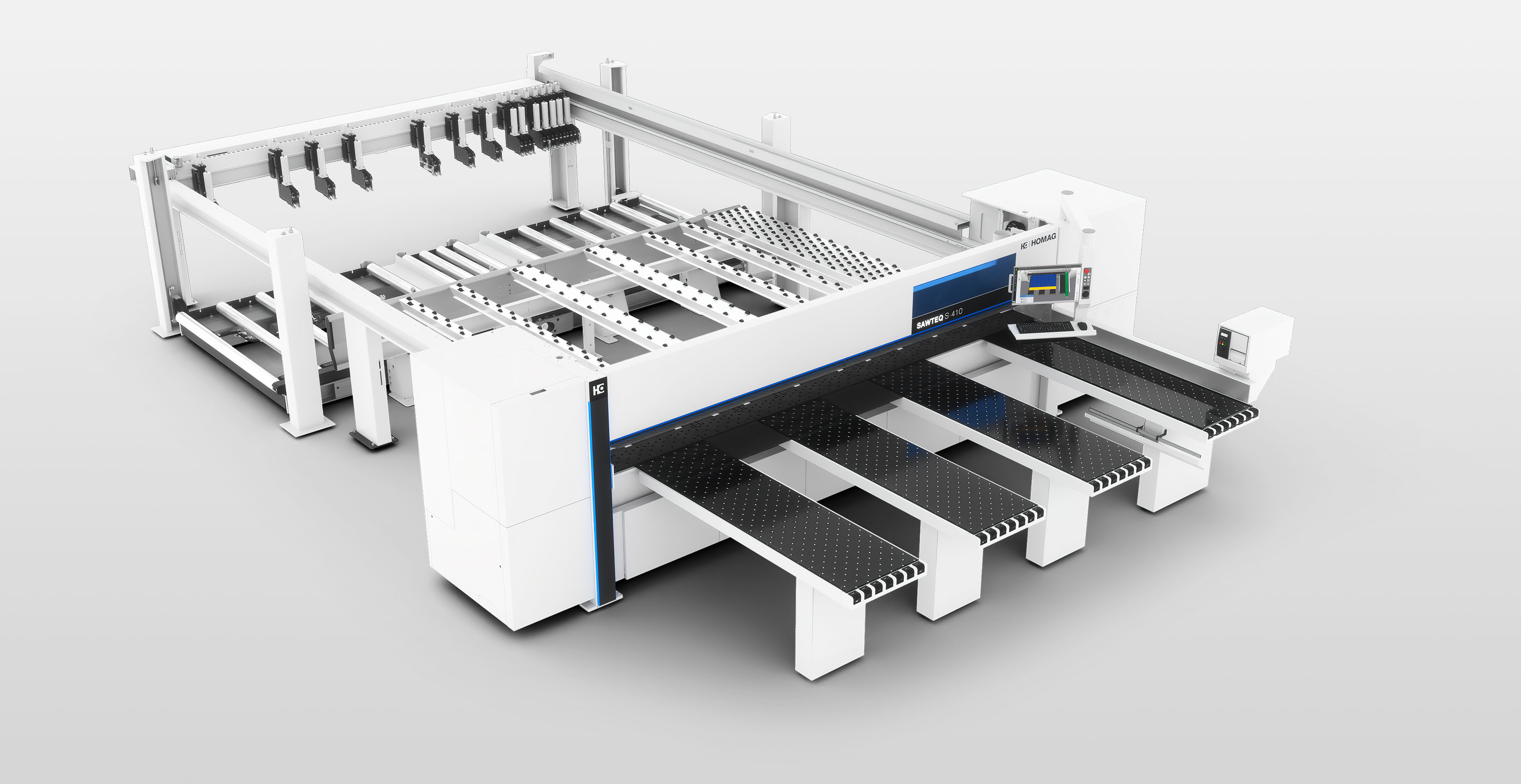
A limited edition panel dividing saw available for SAWTEQ S-300/310 and S-400/410 series, featuring premium capabilities with only 60 machines worldwide. Equipped with exclusive features including manual offcut management, extended warranty, lighting and design package.
The SAWTEQ Edition 60 is a premium panel dividing saw engineered for high-precision cross-cutting and ripping operations on sheet materials in production environments. As a limited-edition variant of the proven SAWTEQ S-300/310 and S-400/410 platform, it delivers repeatable dimensional accuracy critical to modern panel processing workflows where tolerance stack-up directly impacts downstream assembly and finishing operations. This edition distinguishes itself through integrated toleranceCheck technology, which enables continuous real-time verification of dimensional and angular accuracy throughout production runs without operator intervention. The machine incorporates intelliDivide optimization software (1 year subscription included), which algorithmically calculates optimal cutting patterns to maximize yield from sheet stock while minimizing waste—a key economic driver in high-volume panel production. The exclusive feature set and restricted production run of 60 units worldwide positions this machine for shops requiring documentation of precision capability and investment in proven, validated cutting systems. The SAWTEQ Edition 60 is purpose-built for medium to industrial woodworking facilities processing veneered panels, melamine-faced boards, MDF, and solid wood sheet goods at production volumes of 50+ cuts daily. Its precision envelope serves cabinet manufacturers, panel suppliers, and integrated production lines where dimensional consistency directly affects fit-up in assembly. The machine addresses shops that have outgrown manual panel saws but require the accuracy assurance demanded by ISO 9001 certification or automotive/furniture supply contracts. Within the SAWTEQ family, the Edition 60 represents the integration of quality-control capability into the cutting system itself, distinguishing it from standard S-series machines by embedding metrology into the production process rather than treating inspection as a post-cut operation. This architecture reduces scrap cycles and rework while providing traceability documentation suitable for regulated supply chains.