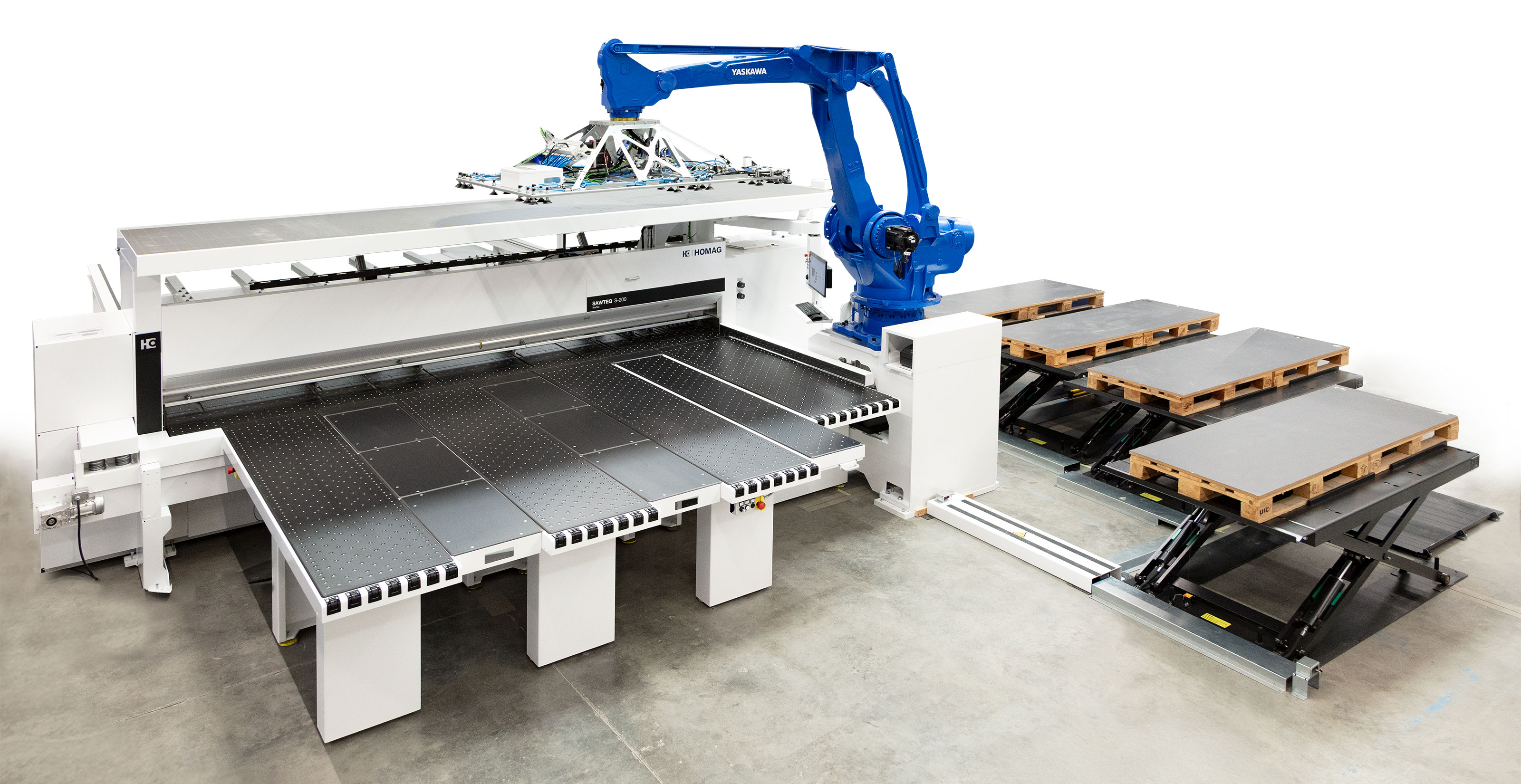
SAWTEQ S-200 flexTec
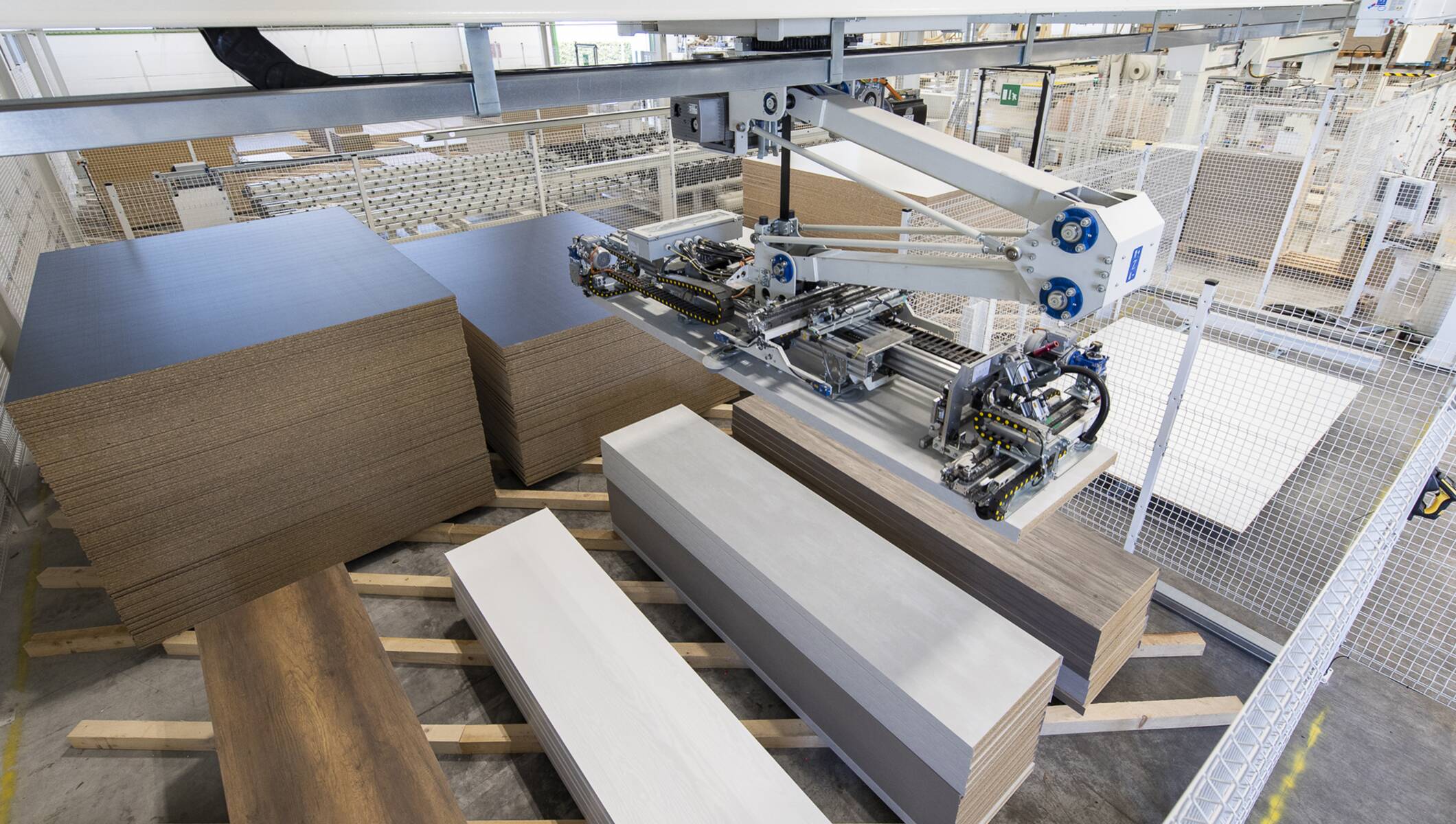
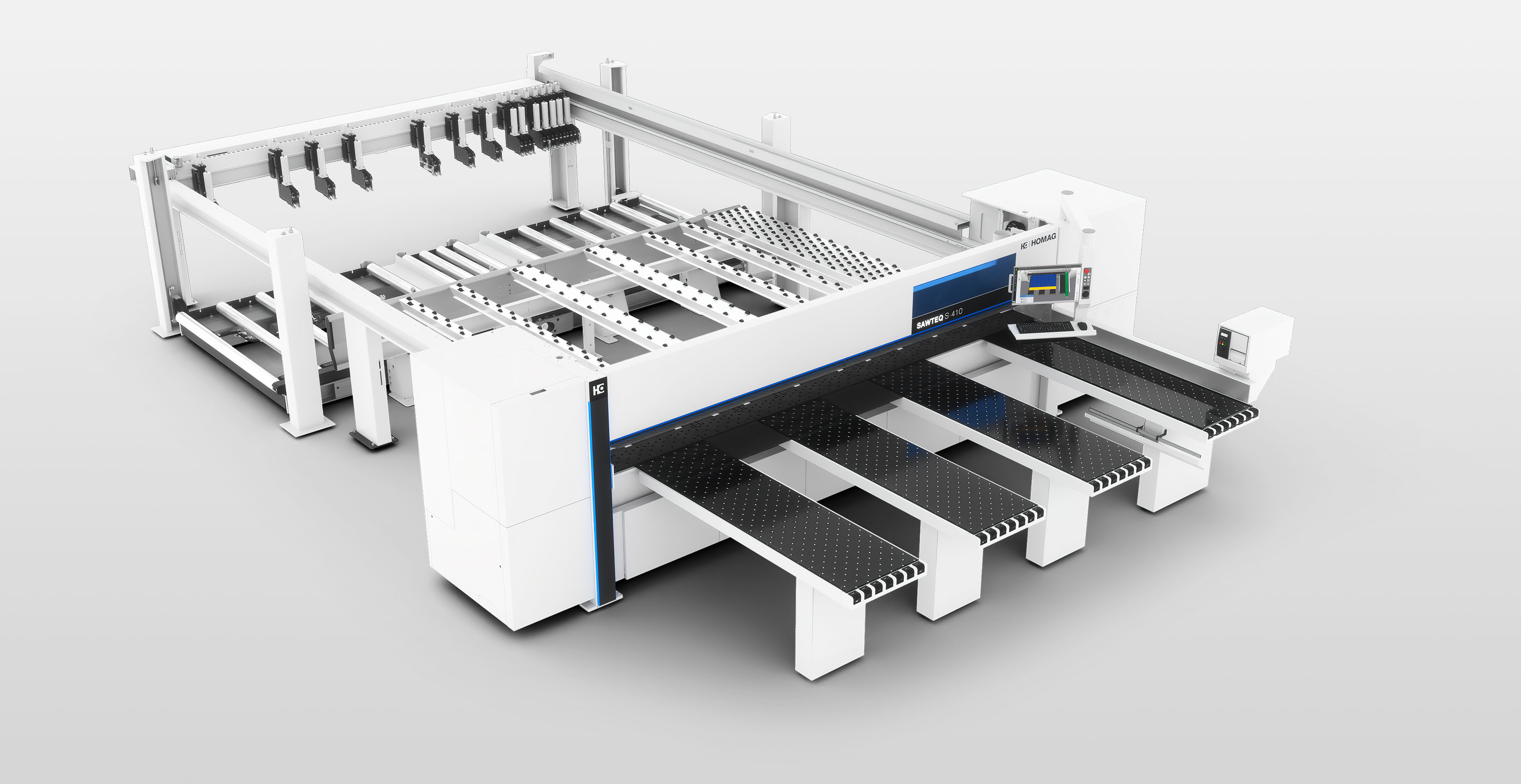
A suction traverse panel saw with integrated robot operation for unmanned, highly efficient batch size 1 production. The system enables continuous, automatic panel dividing with self-lowering lifting tables and removable insert plates.
The SAWTEQ S-200 flexTec is a robot-integrated panel dividing saw system engineered for fully automated, unattended production of sheet materials in batch size 1 workflows. The machine combines a suction traverse panel saw with robotic material handling and self-lowering lift tables, eliminating operator intervention during the cutting and stacking cycle. This integration enables continuous operation across multiple production runs without manual repositioning or operator presence. The system achieves high cutting precision and speed through a 4300 mm cutting length capacity paired with saw carriage speeds up to 80 m/min (optional 120 m/min configuration). The main saw motor options range from 7.5 kW to 21 kW, with blade projection depths of 65 mm standard or 80 mm optional, providing flexibility for both thin sheet and solid panel applications. The 24" full-HD multi-touch display runs CADmatic 5 operating software, enabling intuitive nesting optimization and job setup without specialized programming expertise. This machine targets medium to industrial woodworking facilities handling multi-material panel production—including plywood, MDF, chipboard, and veneer-faced panels—where production volumes justify automation investment but order sizes remain small or highly variable. The flexTec configuration is particularly suited to contract manufacturers, kitchen and cabinet shops, and furniture producers requiring rapid changeover between different panel specifications without production downtime. Within its class, the SAWTEQ S-200 flexTec differentiates itself through integrated robotic material flow and the elimination of manual stack management, reducing labor per cutting cycle by 60–80% compared to conventional traverse saws. The self-lowering lift table design maintains consistent offload height as stacks grow, reducing operator fatigue and material handling errors on high-volume runs.
Side by side, on real specs