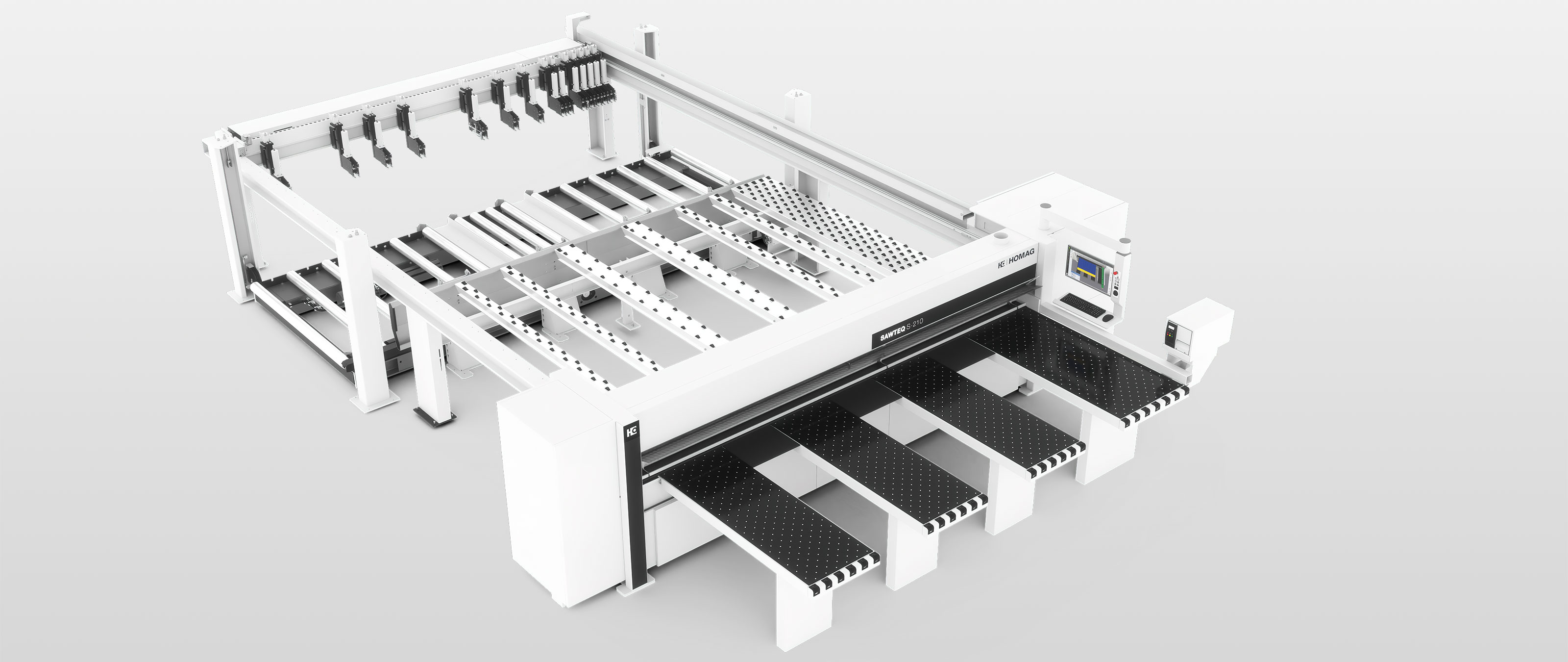
SAWTEQ S-210 Lifting Table
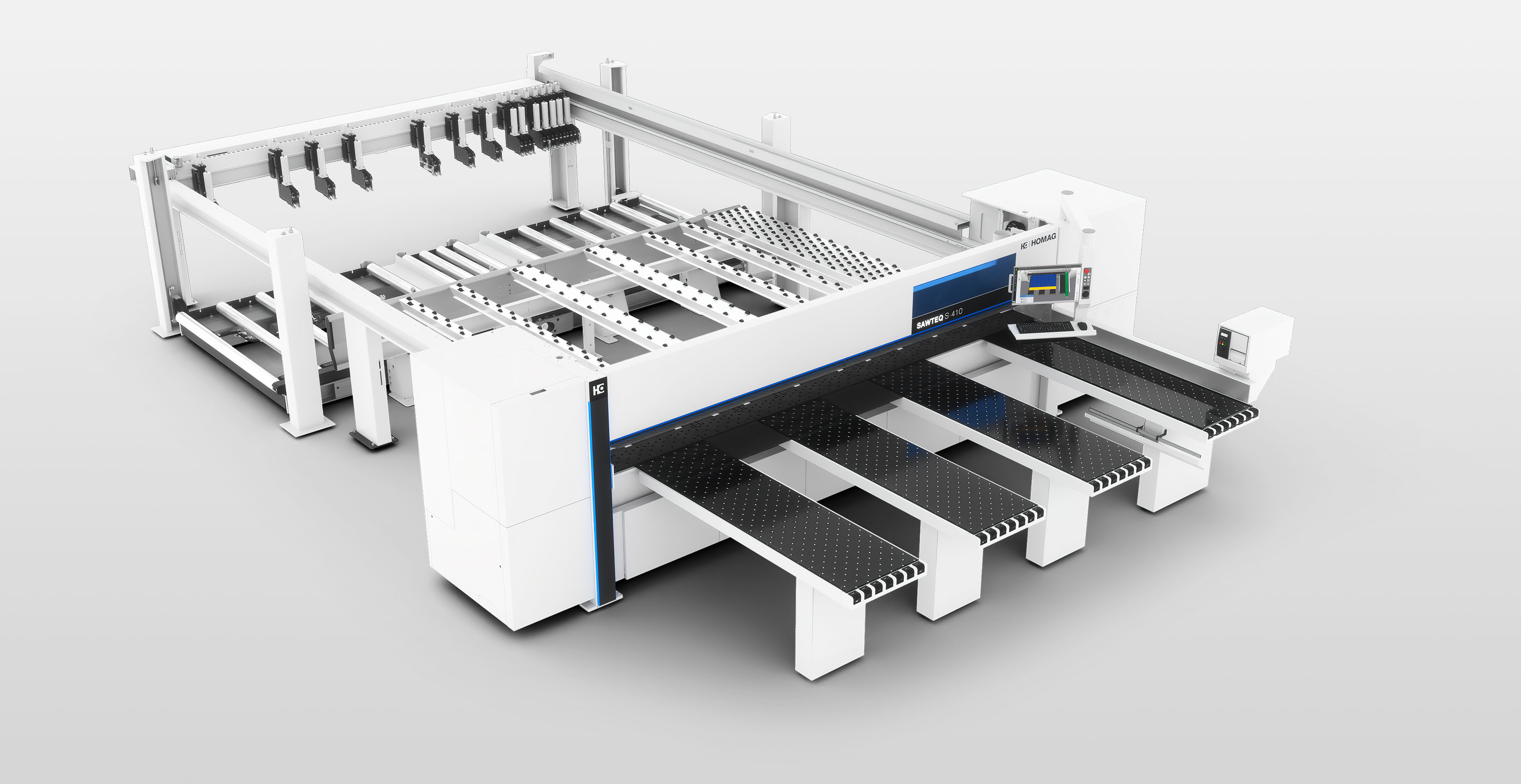
A panel dividing saw with lifting table designed for precise cross-cutting and grooving operations. Features advanced productivity options including Power Concept Advanced for up to 40% output increase.
The SAWTEQ S-210 is a professional panel dividing saw with integrated lifting table, engineered for high-precision cross-cutting and grooving operations in industrial panel processing environments. The machine combines a fixed saw blade with a movable workpiece platform to achieve repeatable, accurate cuts across large panel formats, making it suitable for both solid wood and composite materials requiring clean, dimensionally consistent divisions. The system is built around the CADmatic saw control platform, which orchestrates machine movements with electronic scoring saw adjustment for optimized cut quality across varying material densities. Manual pressure regulation on clamps and pressure beams allows operators to adjust holding force for sensitive materials—critical when processing veneered surfaces, laminates, or delicate wood species prone to chipping. The Power-Loc quick-release blade change system minimizes downtime between tool changes, supporting the machine's capacity for 40% output increases through the Power Concept Advanced package, which optimizes cycle times without sacrificing precision. The lifting table mechanism enables vertical workpiece positioning, improving operator ergonomics and material feed consistency while allowing for simultaneous grooving, cut-outs, and postforming applications from a single setup. This flexibility makes the S-210 suitable for job shops requiring multiple operations per component, as well as dedicated panel processors handling high volumes of standardized cuts across furniture frames, cabinetry blanks, or architectural woodwork components. The SAWTEQ S-210 competes in the mid-to-premium segment of panel saws, positioned between single-function crosscut saws and fully automated processing centers. Its CADmatic control and manual pressure customization differentiate it for workshops that require both production speed and material adaptability—environments where one-size-fits-all automation would waste capacity or compromise surface quality.