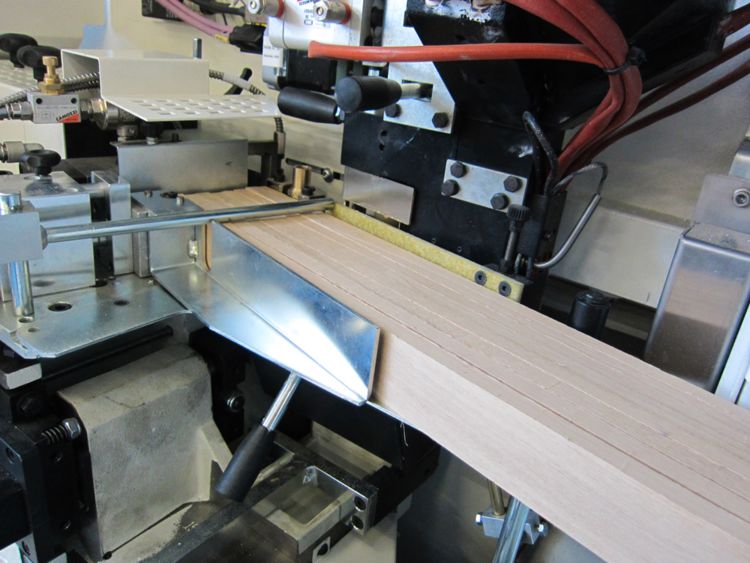
Stefani KD
Continuous and versatile solutions for quality machining with flexible edgebanding capabilities. The Stefani KD delivers reliable performance for single-sided automatic edge banding applications.
The Stefani KD is a single-sided automatic edge bander engineered for flexible, high-throughput edgebanding operations in modern woodworking facilities. As a dedicated edge banding machine from SCM Group, it automates the application of edge material to panel edges, delivering consistent glue application, trimming, and finishing in a single continuous pass, eliminating manual edge banding bottlenecks in production workflows. The machine accommodates panel thicknesses ranging from 8 to 60 mm and edge material thicknesses from 0.4 to 12 mm, enabling operators to process both thin veneers and substantial solid wood edge strips without tooling changes. Feed speeds of 10–20 m/min allow production flexibility: faster speeds for high-volume standardized work or reduced speeds for complex edge profiles and delicate materials. The machine operates on standard compressed air infrastructure (6 bar minimum), making installation straightforward in existing shop environments without requiring specialized electrical or pneumatic upgrades. The Stefani KD targets woodworking operations processing engineered panels and solid wood substrates at medium to industrial scales—shops producing 50+ edgebanded panels daily benefit most from its continuous operation capability. It is particularly suited for manufacturers of kitchen cabinetry, modular furniture systems, and architectural casework where consistent edge appearance and production speed directly impact margins. The machine's versatility across panel and edge thicknesses makes it valuable for job shops managing variable specifications, reducing setup time between production runs. Within its class, the Stefani KD balances simplicity (single-sided application) with configurability, positioning it as a foundational automation tool for workshops graduating from manual edge banding or seeking to replace older equipment. It does not compete in ultra-high-speed industrial lines (which exceed 20 m/min) but excels where reliability, ease of maintenance, and adaptability to diverse edge materials take priority over maximum throughput.
Side by side, on real specs