STORETEQ P-310|P-510 + P-320|P-520
Advanced storage systems for maximizing panel storage capacity in existing hall heights without expensive extensions. Available as second-level (P-310|P-510) or double-level (P-320|P-520) configurations.
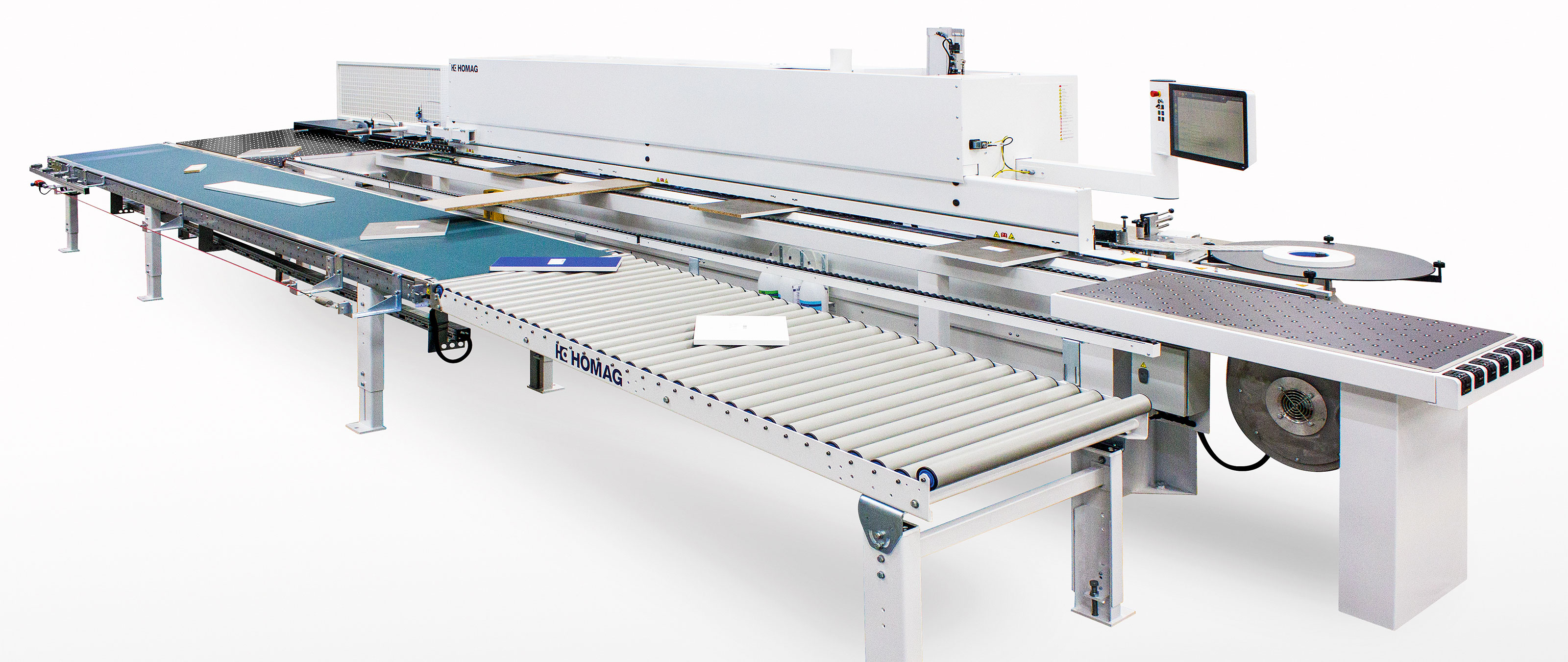
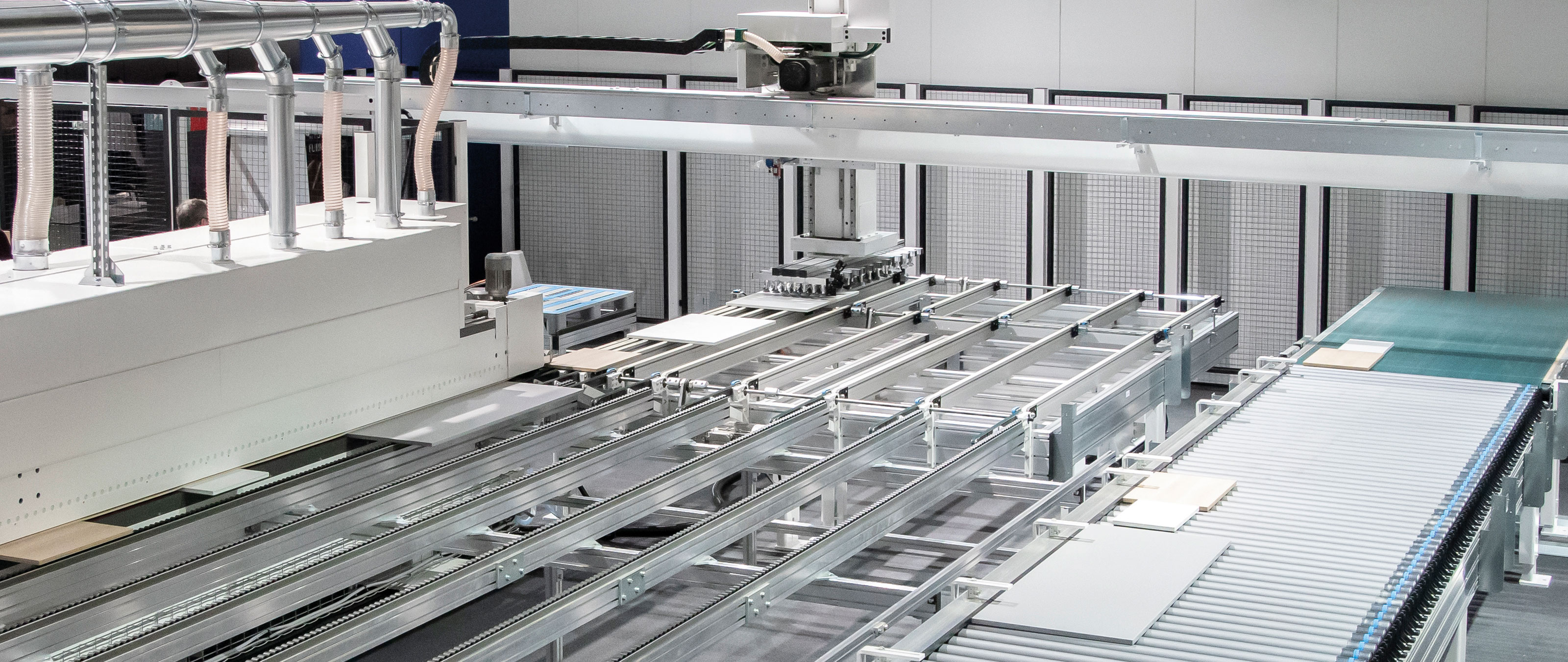
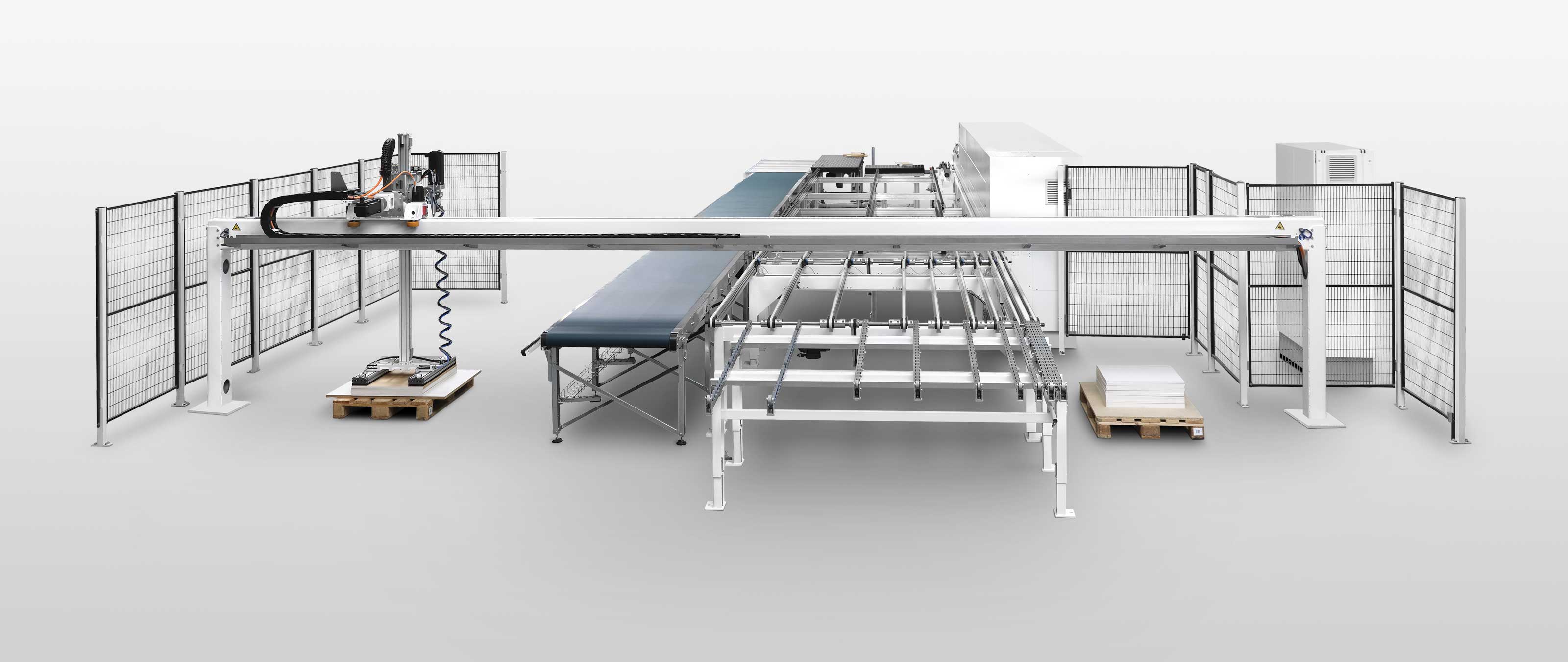
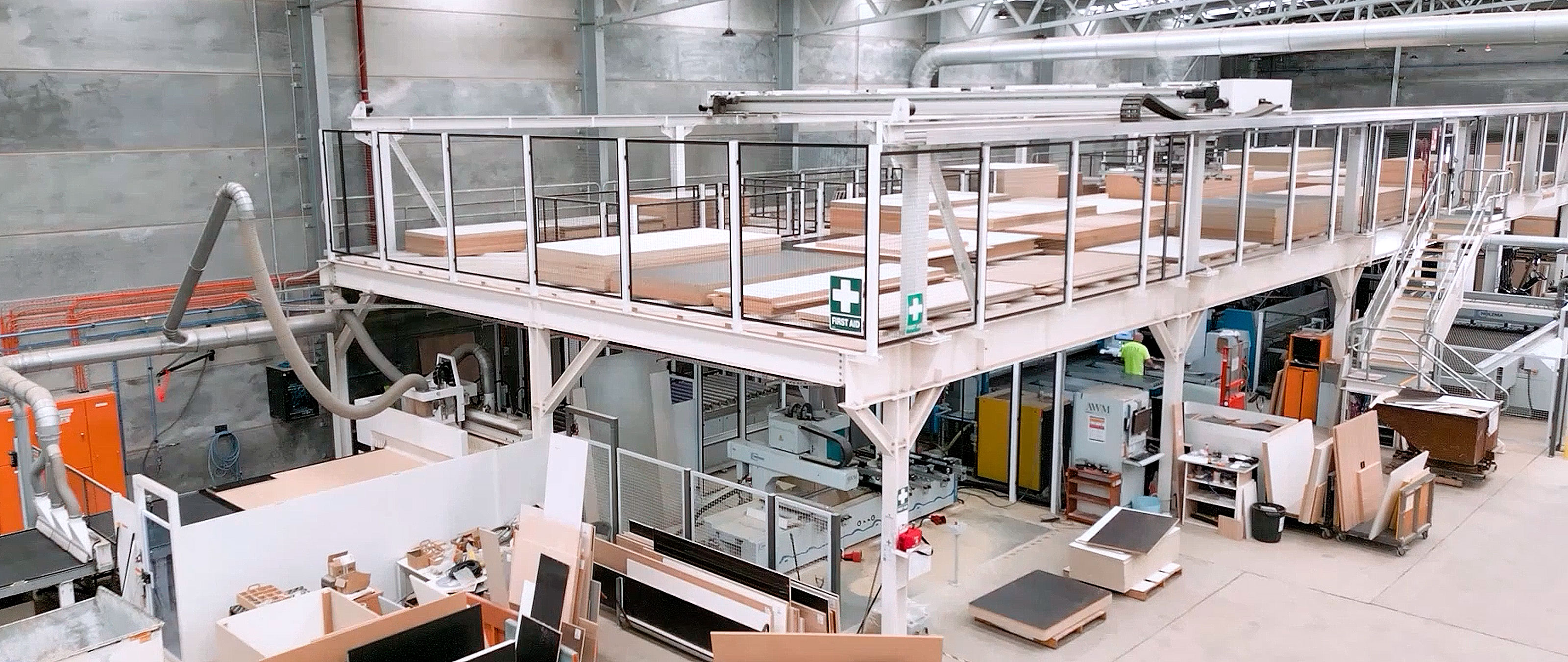
The STORETEQ P-310|P-510 and P-320|P-520 are vertical panel storage and retrieval systems designed to maximize material utilization within existing production hall footprints. Rather than expanding building infrastructure, these systems convert overhead clearance into organized, accessible storage levels—the P-310|P-510 adds a second storage tier, while the P-320|P-520 provides dual-level capacity. Both configurations employ automated bridge and carriage drive systems to manage panel positioning and retrieval without manual handling. These systems are engineered for high-throughput panel logistics with bridge speeds of 60–120 m/min, carriage speeds of 80–120 m/min, and lifting capabilities reaching 65 m/min. The P-500 series extends to 16,000 mm span width and 100,000 mm frame length, accommodating large-format panels up to 5,600 mm length and 2,200 mm width. Load capacity ranges from 250–350 kg per panel, supporting raw boards (6 mm minimum), MDF (3 mm minimum), and coated materials (0.8 mm minimum). Stack heights optimize between 1,200–2,000 mm at the top tier, while ceiling clearance requirements span 2,500–4,000 mm, making them adaptable to varied hall geometries. The STORETEQ series serves mid-to-large production operations processing panel-based materials at volume. These systems eliminate storage-related bottlenecks in furniture manufacturing, cabinetry, engineered wood product assembly, and architectural millwork operations where material flow directly impacts production scheduling. By automating panel retrieval and minimizing manual crane dependency, operators reduce labor overhead and unplanned downtime from storage congestion. Compared to traditional ground-level racking or multi-building expansion, the STORETEQ approach preserves factory floor real estate for active production while leveraging underutilized vertical space. This makes it particularly valuable for facilities operating at or near spatial capacity, where capital investment in storage infrastructure must compete against production equipment budgets.
Side by side, on real specs